


Free written scope consultation - allowances, timeline, and change-order rules on paper before a single trade is scheduled
Sakrete Home Additions & ADU: The Miami Owner’s Guide
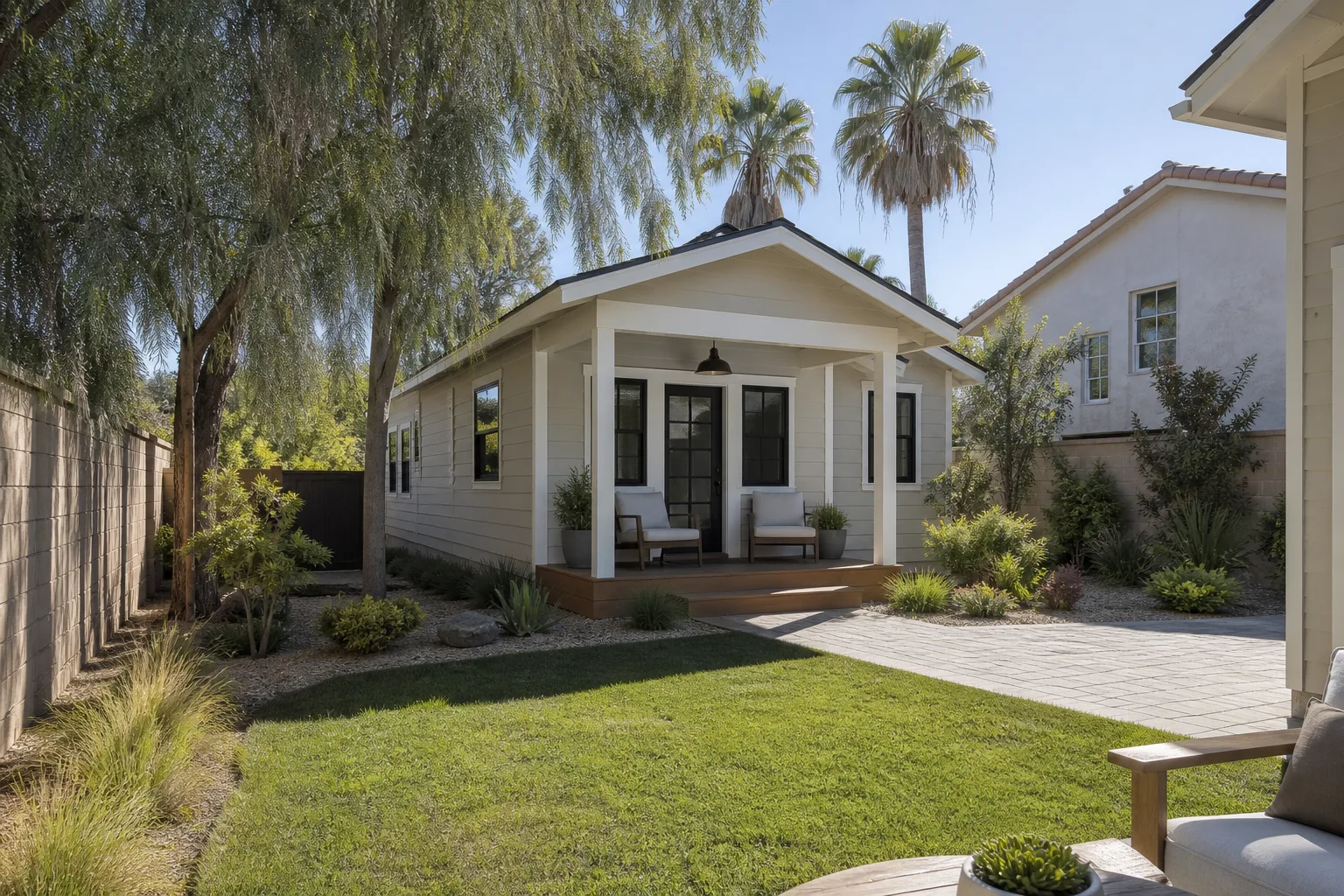
If you’re planning a home addition or ADU in Miami with Sakrete concrete products, here’s what you need to know: a full home addition in Miami typically runs $53,100 – $153,400 installed, while a standalone ADU lands between $106,200 – $259,600 depending on square footage, foundation work, and finishes. We work with Sakrete mixes daily on these projects, and most structural repairs or new pours can be scheduled within a week. The part that usually fails first isn’t the concrete itself, it’s the prep work under it: poor compaction, the wrong mix for Miami’s moisture levels, or subgrade that wasn’t stabilized before the pour.
Here’s the thing about concrete in Miami. Our soil is mostly limestone with a high water table and salt air pushing in from the coast. That combination eats at standard mixes faster than almost anywhere else in Florida. Sakrete makes specific products for this, and using the right one matters more than most homeowners realize. We’ll get into the details below.
Key Takeaways
- Installed cost ranges: $53,100 – $153,400 for a home addition, $106,200 – $259,600 for an ADU in Miami.
- What fails first: Usually the subgrade or the bond between old and new concrete, not the Sakrete product itself.
- We stock on the truck: High-strength mix, bonding adhesive, repair mortar, and moisture barriers suitable for Miami’s climate.
- Safety note: Concrete work involves heavy material and structural considerations; this isn’t a weekend paint job.
Which Sakrete Models This Applies To
We work with the full Sakrete line you’d use on a home addition or ADU: High-Strength Concrete Mix (4000 PSI), Crack-Resistant Concrete Mix, Sand Mix for topping and leveling, Fast-Setting Concrete for posts and anchors, and their Concrete Bonding Adhesive for tying new pours into existing slabs. The package weight, set time, and aggregate size differ meaningfully between these, and grabbing the wrong bag at the supply house is an easy mistake. 5000 PSI mix isn’t just “stronger,” it uses a different cure profile that matters when Miami humidity keeps things damp longer than the bag assumes.
OEM versus aftermarket here is less complicated than it is for mechanical parts. Sakrete is the spec, but the real “part” in a home addition is the slab system: subgrade prep, vapor barrier, rebar or wire mesh, and the concrete itself. Generic 4000 PSI mixes from other suppliers work in a pinch, but Sakrete’s blend ratios are consistent bag to bag, which matters when you’re pouring a 20-yard footer and can’t have batch variance. One compatibility gotcha we see regularly: Sakrete Crack-Resistant Mix contains fiber reinforcement, which is fine for walkways and small pads, but not a substitute for rebar in load-bearing sections of an ADU foundation. If a permit inspector sees fiber-only reinforcement where the plans call for steel, that’s a stop-work order.
For Post-Tension and structural slabs on Miami’s limestone, we recommend High-Strength Mix with proper reinforcement, nothing less. The water table in areas like Coconut Grove and parts of Little Havana can sit just a few feet down, so a good moisture barrier under the slab matters as much as the mix itself if you want it to last beyond ten years without spalling.
Styles & brands we work with







Signs Your Sakrete Home Additions & ADU Is Failing
- Hairline cracks widening past a credit card’s thickness. This means the slab is moving or the original mix wasn’t reinforced properly. In Miami, expansive soil isn’t the culprit the way it is out west; here it’s usually water intrusion or a poorly prepared subgrade settling unevenly.
- Efflorescence, that white powdery crust on the surface. That’s salt and mineral deposits coming up through the concrete. With Miami’s humidity and coastal air, this shows up fast if a vapor barrier was skipped under the slab.
- A hollow sound when you tap the surface. That’s the slab delaminating from its base. We’ve seen this on ADU foundations in North Miami where a fast-setting mix was used for the top coat over a slower-curing base, and the two separated within three years.
- Standing water that doesn’t drain after rain. Concrete looks like a flat surface, but a properly poured slab has a nearly invisible slope. If water pools, the pour was off, and in Miami’s afternoon downpours, that means standing water against your foundation every single day.
- Rust-colored streaks or flaking around anchor points. That’s moisture reaching the rebar and corroding it. Once rebar rusts, it expands and cracks the concrete from the inside. We see this a lot on handrails and posts that were set with Fast-Setting Mix without proper drainage or sealing.
See the difference
 Before
 After
After Before
 After
After Before
 After
AfterReplacement Cost & What’s Included

For a full home addition in Miami, you’re looking at $53,100 – $153,400 installed. An ADU runs $106,200 – $259,600. But those are all-in numbers covering design, permits, excavation, foundation, framing, mechanicals, and finishes. If you’re specifically talking about tearing out and repouring a failed slab or portion of one, a partial slab replacement on a home addition typically lands in the $5,900 – $16,520 range depending on square footage and access.
Every quote we write includes the line items: demolition and haul-off, subgrade prep and compaction, vapor barrier, reinforcement, Sakrete mix with the right PSI rating for the application, and curing time before loads go on. No change orders unless you change the scope. That’s the Relay Visibility Guarantee: written price before work starts, live arrival times, photo updates before and after. When it’s a foundation, “we’ll just add it later” is how you end up with a $30,000 surprise. We don’t do surprises.
DIY or Call Us?
Let’s be straight: you can patch a small crack yourself. For a thin crack in a walkway or patio, clean it out, use a concrete crack filler, and seal it. That’s honest weekend work. But if you’re talking about a foundation, a load-bearing wall’s footing, a failed slab under an existing structure, or anything that a permit inspector will look at, forget it. You’re pouring thousands of pounds of material that has to hold a roof and walls through hurricane season. Get the mix wrong, skip the vapor barrier, pour on uncompacted fill, and you’ll be doing it again in five years, only this time with a cracked beam and a mold issue in the walls.
Concrete work on a home addition also needs a curing window. If rain hits a fresh pour before it sets, the surface is ruined, and in Miami, rain comes when it comes. We watch the radar and schedule pours around the forecast, not the other way around. If any part of this makes you pause, call (850) 801-8046 and we’ll tell you honestly whether this is a patch job or a full repour.
FAQs

A properly poured, properly cured slab with a vapor barrier and correct steel should last 40 – 50 years before major issues, even in Miami’s salt air and humidity. What cuts that lifespan short is skipping the vapor barrier, using the wrong PSI rating, or pouring on a poorly compacted base; we’ve inspected slabs in Coral Gables that were done right in the 1970s and are still solid. Call (850) 801-8046 if you want us to check yours.
Sometimes, yes. Hairline cracks without displacement can be filled and sealed. But if the slab has settled more than a quarter inch, or if water is getting through to the rebar, patching is a bandage. We’ll tell you which situation you’re in after a site visit; estimates are free either way.
The pour itself is usually one day, but the full process, which is excavation, forming, reinforcement, pour, and cure, runs 7 – 10 days before framing can start. Curing can’t be rushed; putting load on green concrete in Miami’s heat only means it sets fast on top and stays weak underneath. Call (850) 801-8046 and we’ll give you a real timeline for your specific project.
Yes. Our trucks carry High-Strength Concrete Mix, Fast-Setting Mix, bonding adhesive, and repair mortar. We’re an independent contractor, not affiliated with Sakrete, but we stock their mixes because we’ve learned which products hold up to Miami’s climate. We also work with KraftMaid for cabinetry, Cambria and Silestone for countertops, so the whole addition comes together without chasing five different suppliers.
Written by Luca Romano, Owner & Lead Contractor, Sawyer Remodel Miami at Sawyer Remodel Miami, serving Miami and nearby areas.


