




Free written scope consultation - allowances, timeline, and change-order rules on paper before a single trade is scheduled
Styles & brands we work with







See the difference
 Before
 After
After Before
 After
After Before
 After
AfterHow Much Does Kitchen Island Installation Cost in Miami?
A kitchen island installation in Miami typically costs between $3,540 and $11,800, with most homeowners landing around $6,500 to $8,000 for a mid-sized island with standard finishes. That range covers everything from a small prep island with basic cabinetry up to a large custom island with premium countertops, plumbing for a sink, and electrical work. The final number depends on size, materials, whether you’re adding plumbing or electrical, and how much structural work your existing floor needs.
We’re going to break down exactly where that money goes, what drives the price up or down in Miami specifically, and how to get a real number without playing phone tag. Sawyer Remodel Miami puts every price in writing before work starts, so you’ll never get a quote at $4,000 and an invoice at $9,000. Here’s the full picture.
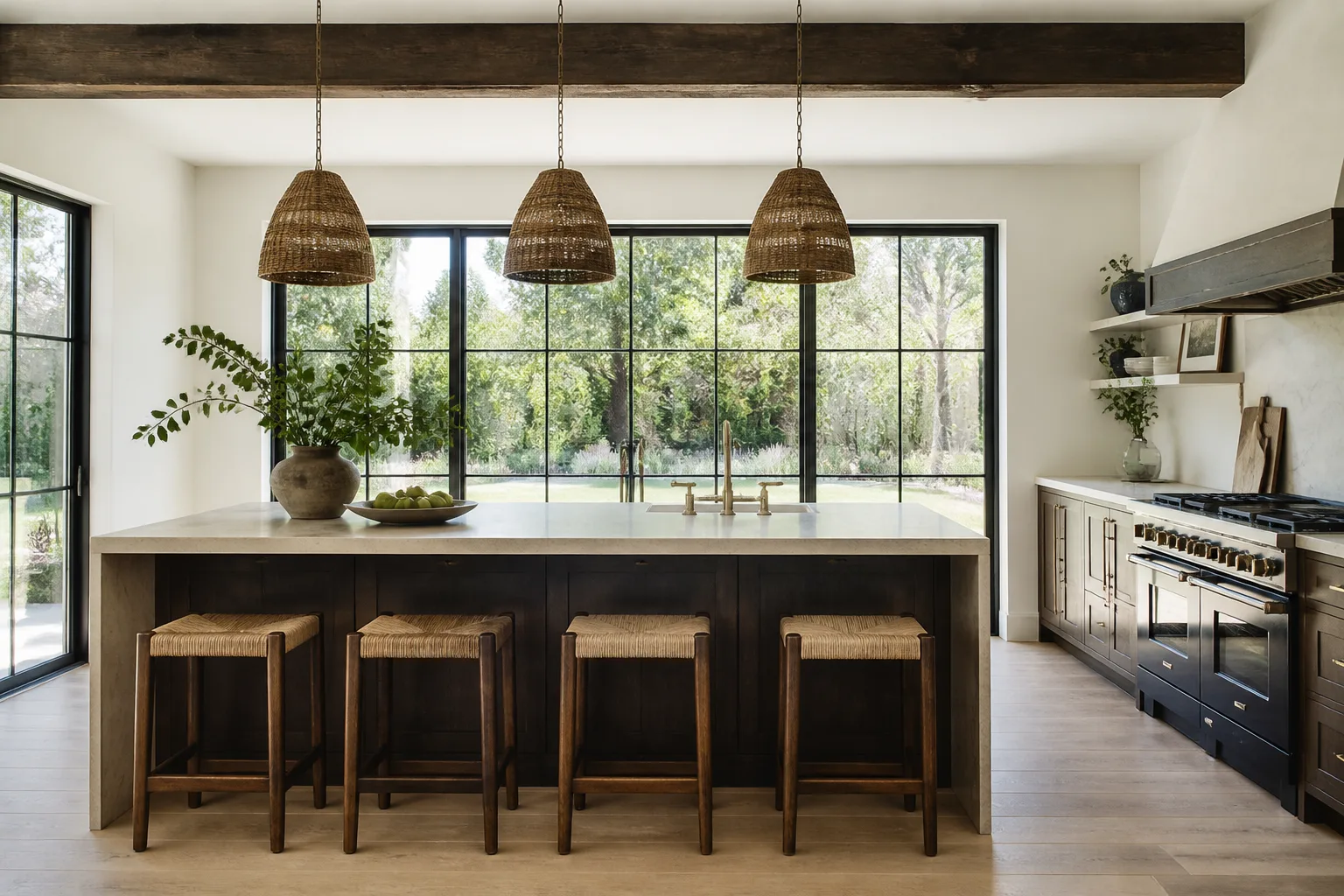
Kitchen Island Installation Cost Breakdown (2026)
Here’s what a kitchen island installation actually costs, line by line, in the Miami market:
| Line Item | Typical Cost Range | Notes |
|---|---|---|
| Base Cabinetry (stock) | $1,200 – $3,500 | Stock or semi-custom boxes, standard sizes |
| Base Cabinetry (custom) | $3,500 – $7,000 | Custom sizing, soft-close hardware, specialty finishes |
| Countertop (laminate or butcher block) | $400 – $1,200 | Budget-friendly, good for smaller islands |
| Countertop (quartz or granite) | $1,200 – $4,500 | Depends on slab size and edge profile |
| Plumbing (sink, faucet, drain lines) | $800 – $2,500 | If adding a prep sink or bar sink |
| Electrical (outlets, under-cabinet lighting) | $350 – $1,200 | Code requires at least one outlet per island |
| Labor (demolition, assembly, install) | $800 – $2,000 | Usually 1 – 3 days depending on scope |
| Permits and inspections | $150 – $500 | Plumbing and electrical work require permits in Miami-Dade |
Those numbers are for a typical island in the 4-by-7-foot range. Go bigger, add a second tier, or spec waterfall edges on both sides, and you’ll push toward the top of that $11,800 range or beyond. Scale down to a compact 3-by-4-foot island with laminate and no plumbing, and you’re looking at the lower end.
Here’s something else that matters in Miami: humidity and hurricanes. Miami-Dade County has some of the strictest building codes in the country, which is a good thing, but it does add cost. Cabinetry and countertops need to be installed to withstand moisture swings that would never cross a contractor’s mind in Orlando or Tampa. If your island includes any electrical work, Miami-Dade requires a permit and an inspection, full stop. A contractor who tells you they can skip the permit to save you money is putting you on the hook for code violations if you ever refinance or sell. Sawyer Remodel Miami pulls permits on every project. We don’t make exceptions because there’s a sale at the permit office.
What Affects Kitchen Island Installation Pricing in Miami
Here are the five or six things that actually move the number, based on what we see every week in Miami homes:
- Plumbing changes. Adding a sink to an island means running supply lines and a drain through your slab. In Coral Gables and older Miami neighborhoods, many homes sit on concrete slabs, which means cutting through concrete to run a drain line. That’s $800 to $2,500 in most cases. If your island doesn’t have a sink, you save that whole amount.
- Electrical work. Code requires at least one GFCI outlet on every island. If your kitchen’s panel is already maxed out, adding a circuit costs more. Older Key Biscayne and Little Havana homes built before the 1990s often have undersized panels that need subpanel work, which can add $500 to $1,500.
- Countertop material and edge profile. Quartz from Cambria or Caesarstone runs higher than mid-range granite, and the edge you pick matters too. A standard eased edge is included in most quotes. A full bullnose or ogee edge adds $15 to $40 per linear foot. A waterfall edge that runs the countertop down both sides can add $1,800 to $3,500 on its own.
- Island size and shape. A single-level 4-by-6-foot island is the sweet spot for pricing. Add a raised bar top for seating, and you’re adding structure, more countertop, and more labor. An L-shaped or curved island pushes you into fully custom territory, and that’s where you’ll see $10,000-plus island quotes even without plumbing.
- Flooring and drywall work. If you’re swapping out a peninsula for a full island, the old footprint leaves a gap in your tile or wood floor. Matching existing flooring is doable but rarely invisible. Plan for $300 to $1,000 in flooring work, more if your tile was discontinued and you need to replace a larger section.
- Access and parking. Miami’s condo buildings have freight elevator hours, loading dock reservations, and strict noise rules. If you’re in a high-rise in Brickell or Edgewater, expect labor costs to run 10 to 20 percent higher than a single-family home in Kendall or Palmetto Bay just based on access logistics.

Custom vs. Stock: Where the Big Price Swings Happen
The single biggest pricing divide in kitchen island installation is stock versus custom cabinetry. A stock base cabinet from a standard line like KraftMaid runs $1,200 to $3,500 for the island footprint. A fully custom island built to your dimensions, with pull-out storage, built-in microwave drawer, and a finished back panel, runs $3,500 to $7,000 or more just for the boxes.
The reason custom costs what it costs: every panel is cut to order, the finish is applied in a controlled environment, and the installer has to shim and level each piece on site. Stock cabinets arrive pre-assembled and go in fast. Custom means more hours of skilled labor, and skilled labor in Miami runs $65 to $115 per hour right now.
You don’t have to pick one or the other for the whole thing. Some of the best kitchens we’ve built in Palmetto Bay and Pinecrest pair stock cabinets with a custom island as the centerpiece. That gets you the look without the full custom price on the perimeter cabinets.
Kitchen Island Options and What They Cost
Standard Prep Island
$3,540 – $5,900. A 4-by-5-foot island with stock cabinetry, laminate or mid-range quartz countertop, one outlet, and no plumbing. This is the entry point for most Miami homeowners who just want more counter space and storage without opening the slab.
Island with Seating
$5,900 – $8,260. The same footprint with a 10-to-14-inch overhang for bar stools, plus framing reinforcement and potentially corbels or steel supports for the overhang. Figure $300 to $800 extra for the structural support alone, plus the stool-side finish work.
Island with Prep Sink
$6,500 – $10,000. The plumbing is the big add here. If your kitchen layout puts the island more than 6 feet from an existing drain line, costs climb fast. Faucet choice matters too: a Kohler or Moen prep faucet runs $200 to $600, plus installation.
Two-Tier Island
$7,500 – $11,800. A raised eating bar at 42 inches with the work surface at 36 inches. This adds structure, additional countertop, more electrical, and more labor. It also tends to look dated in modern kitchen design, so we’ll tell you straight if we think a single-level island with a large overhang gives you the same function for less.
Full Custom Island
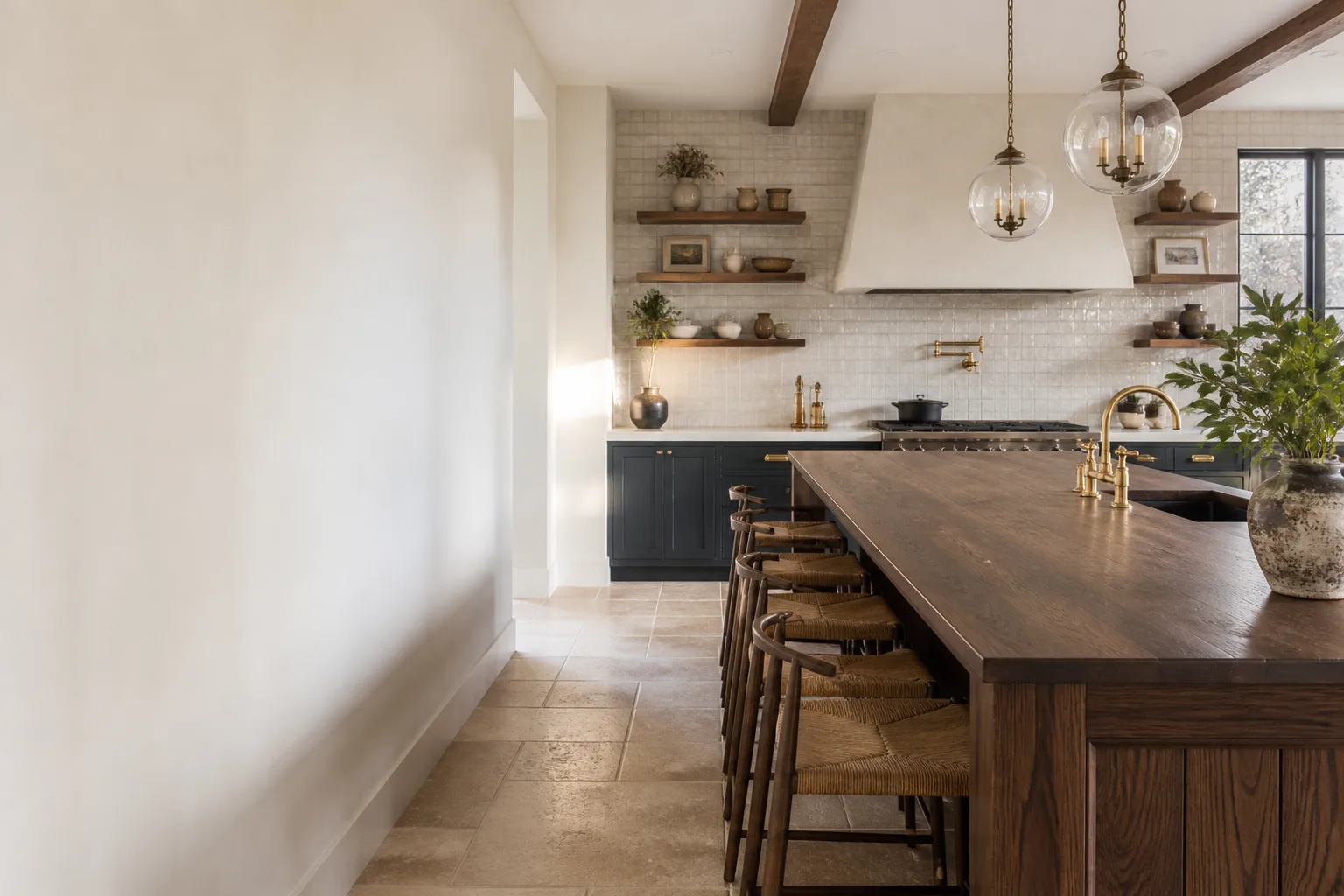
$10,000 – $15,000+. Custom dimensions, waterfall edges, integrated appliances, exotic stone, multiple work zones. If you’re building this in Coral Gables or a waterfront home in Miami Beach, budget the top of the range and be honest with yourself about whether you want a kitchen centerpiece or a functional workhorse. Both are valid. They just cost differently.
How to Save on Kitchen Island Installation
Saving money on an island install isn’t about cutting corners. It’s about making choices before the first cabinet gets ordered. Here’s what actually works:
- Skip the sink. We said it earlier and we’ll say it again: plumbing through a concrete slab is the single most avoidable cost in this project. A prep sink is nice. Most Miami kitchens already have a main sink 8 feet away. The money you save on plumbing can upgrade your countertop from laminate to quartz.
- Use stock cabinets for the island base. KraftMaid’s stock line has island-ready configurations that go in fast and hold up well. You won’t get exotic finishes, but you’ll get a tight, level install and a price that makes sense. We install KraftMaid and Wellborn cabinetry regularly and both do the job when sized correctly.
- Plan the electrical during rough-in. If you’re already doing a home remodel or a larger kitchen project, running the island’s electrical at the same time costs a fraction of adding it later as a standalone job. Doing a kitchen remodel and an island install together is almost always cheaper than doing the island later.
- Choose a standard depth and width. Cabinet boxes come in standard increments of 3 inches. A 24-inch-deep island costs less than a 27-inch-deep island because no one has to cut down or build out cabinet boxes. The same goes for length: every custom increment adds labor.
- Get the quote in writing before you commit. Sawyer Remodel Miami gives you a written price before any work starts, and that price is the price. No allowances that balloon. No change orders for things that should have been in the original scope. You can call (850) 801-8046 for a free estimate and we’ll walk the site and give you the real number.
Kitchen Island Installation vs. Full Kitchen Remodel
If you’re pricing an island install, you might be wondering whether it makes more sense to fold it into a larger remodel. A full kitchen remodel in Miami runs $16,520 to $53,100. A small kitchen remodel runs $10,620 to $23,600. An island-only install sits at $3,540 to $11,800.
The math favors doing it all at once if your kitchen is 15-plus years old. Here’s why: the island shares labor, permits, and mobilization with the larger project. If you do the kitchen island installation in Miami now and remodel the rest in two years, you’ll pay for permit coordination twice, have your kitchen torn up twice, and you’ll likely be redoing the island’s electrical or flooring to match the new work. If your cabinets are in good shape and you just want an island, a standalone install makes total sense. If your kitchen is tired, do it all once and let the contractor’s mobilization cost cover both.
What a Good Kitchen Island Install Timeline Looks Like
A typical island install takes 3 to 7 days from first cut to final cleanup. That assumes the plumbing is simple or non-existent and the cabinetry is stock or semi-custom. Custom cabinetry adds 4 to 8 weeks on the front end for manufacturing. Countertop fabrication adds 1 to 2 weeks after the cabinets are set, because the stone fabricator templates the base, cuts the slab, and returns for final install.
In Miami, add a day or two for inspections if you have plumbing or electrical work. Miami-Dade inspectors are responsive but you can’t rush the process. A contractor who promises a same-day plumbing inspection approval is lying to you.
Why Miami Labor Costs Are Higher Than the Rest of Florida
You’ll notice Miami pricing runs higher than Jacksonville or Pensacola. That’s not contractors padding the bill. Miami-Dade’s building code is stricter about window ratings, wind loads, and moisture management, and those codes apply to interior work too when it involves structural changes or mechanical systems. A cabinet installer who’s certified to work in Miami-Dade has spent time and money on code training. A countertop crew that works in Coral Gables has dealt with historic district review boards. That expertise shows up in the labor rate.
It’s also demand. Miami’s remodeling market has been running hot for a decade, and good crews book out 4 to 8 weeks in advance. If someone tells you they can start tomorrow, that’s not a reflection of superior efficiency. It’s usually a reflection of the fact that nobody else hired them.
Permits and Code Requirements for Kitchen Islands in Miami
Here’s the short version: you need a permit if you’re adding plumbing or electrical. No permit is required for a strictly cabinetry-and-countertop island, as long as you’re not moving walls or changing the kitchen’s layout in a way that affects egress. But an outlet on the island means a permit and an inspection. A sink means a plumbing permit and an inspection.
If your island includes a cooktop, that’s a gas or electrical permit, and it gets more involved. Cooktop islands need proper ventilation, which in most Miami homes means a downdraft vent unless you’re doing a hood. A downdraft system runs $1,200 to $3,000 installed. A hood runs higher and usually requires ducting through the ceiling.
Sawyer Remodel Miami handles permit applications and coordinates with the building department on your behalf. You won’t stand in line at the Miami-Dade permitting office. That’s part of the job.
FAQs – Kitchen Island Installation Cost
How much does a kitchen island cost in Miami in 2026?
A kitchen island in Miami costs $3,540 to $11,800 for a typical installation, with most homeowners paying $6,500 to $8,000 all-in. Smaller prep islands start around $3,540, while full custom islands with plumbing and premium countertops can exceed $15,000. Call (850) 801-8046 for a free estimate and we’ll give you the exact number for your kitchen.
Is a kitchen island worth the money?
For most Miami kitchens, the answer is yes. A kitchen island adds work surface, storage, and seating in one footprint, and it’s consistently one of the features homebuyers look for in Miami real estate listings. You won’t recoup $11,800 dollar-for-dollar on resale, but you’ll sell faster and you’ll use the island every day until then. If you’re deciding between an island and a full kitchen remodel, a full remodel at $16,520 to $53,100 gives you the bigger return, but an island-only install at $3,540 to $11,800 is the lower-cost improvement that still changes how your kitchen works.
Can you install a kitchen island in a small kitchen?
Yes, but only if you have at least 36 to 42 inches of clearance on all sides. A compact 3-by-4-foot island fits in many Miami galley kitchens in older Coral Gables and Coconut Grove homes, as long as the surrounding walkways stay at code-required widths. If you have less clearance, a peninsula or a butcher block cart is the better call. We’ll tell you straight whether an island fits your kitchen or not before you spend a dollar.
How long does kitchen island installation take?
Plan for 3 to 7 days for a standard install, plus 4 to 8 weeks if you’re ordering custom cabinetry. Countertop fabrication adds 1 to 2 weeks after the base is set. Plumbing and electrical inspections through Miami-Dade can add 2 to 4 days depending on inspector availability. Sawyer Remodel Miami gives you a live arrival time and photo updates before and after each day’s work, so you know exactly where the project stands.
Can you add a sink to an existing kitchen island?
Yes, and it costs $800 to $2,500 for the plumbing work, depending on how far the island sits from the main drain line and whether your home is on a concrete slab. Most Miami homes built before 2000 are slab-on-grade, which means cutting through concrete to run the drain. A licensed plumber should do all of this work, and a permit is required. You don’t want a DIY island sink under a Miami slab: a failed drain connection there means jackhammering the floor a second time.
Is it cheaper to buy a pre-made island or build one?
A pre-made or modular island runs $1,500 to $4,000, compared to $3,540 to $11,800 for a built-in installation. The pre-made route is cheaper upfront, but it won’t be anchored to the floor, won’t have permanent electrical, and won’t hold up to Miami’s humidity as well as installed cabinetry with a sealed countertop. If you’re in a rental or planning to move within two years, modular makes sense. If you own the home and plan to stay, build it in.
Pricing reflects the Miami market as of 2026. Sawyer Remodel Miami offers free estimates – call (850) 801-8046.
What Our Customers Say
"Quote was itemized and every change was approved in the app."
- Sasha L."Floors and paint finished on time. Floors were sanded, stained, and the walls painted without any gaps in the schedule."
- Ron T."Straight talk and simple communication. Every question got an answer by text within the hour."
- Cherie A.